Food Security in Puerto Rico: Opportunities and Challenges (English Version)
Food security refers to ensuring that all people have stable access to sufficient, safe, and nutritious food. In Puerto Rico, more than 85% of the food we consume is imported. This excessive dependence exposes the island to economic and social risks: a single disruption in the supply chain, as occurred after Hurricane María in 2017, can empty supermarkets within days. This is one of the most urgent issues for the future of our country.

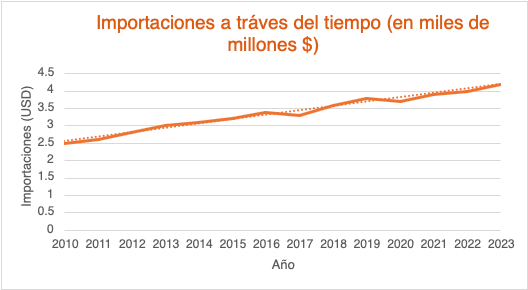
Dependence on Imports
- According to data from the USDA ERS, Puerto Rico imports around $3.5 billion in food each year, while its agricultural exports represent only a fraction of that amount.
- This means that out of every 10 products on Puerto Rican households’ tables, 8 come from abroad, which weakens the local economy.
- It also means that we pay a much higher price compared to what it would cost if those products were produced locally.
- In times of global crises, such as the COVID-19 pandemic or international conflicts that drive up the prices of grains and fertilizers, the island finds itself in a vulnerable position.
Local Agricultural Potential
Although dependency is high, Puerto Rico has the resources to move toward greater self-sufficiency; that high percentage of imports can gradually be reduced:
- Plantains and Bananas: In 2022, around 165 million units were produced, covering part of local demand—something very positive.
- Coffee: Before Hurricane María, Puerto Rico produced more than 200,000 quintals annually; after the hurricane, production dropped to 20,000 quintals. Today, efforts are underway to recover production levels through reforestation programs.
- Vegetables: The southern region (Santa Isabel, Juana Díaz, Salinas) is recognized as the island’s “pantry,” producing tomatoes, lettuce, and peppers that supply supermarkets.
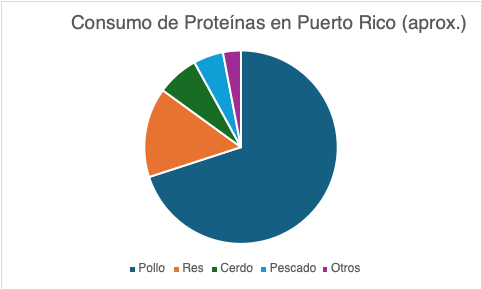
- Proteins: Chicken represents nearly 70% of meat consumption on the island, but the majority is still imported; increasing local production would be key.
Main Challenges of the Island
- Aging Agricultural Workforce – 62% of farmers are over 55 years old, which puts generational renewal at risk. This is very concerning, as it is necessary for young people to enter agriculture. Programs must be created to attract this sector.
- Low Technological Investment – Mechanization and the use of smart irrigation systems remain limited. Innovating the agricultural sector is indispensable.
- High Production Costs – Electricity in Puerto Rico is among the most expensive in the U.S. (as we discussed in our cost of living article), making protected agriculture (greenhouses) more costly.
- Limited Market – Many farmers face difficulties placing their products in supermarket chains or exporting. A plan should be implemented to help farmers gain easier access to supermarkets.
Future Implementation
- Incorporating Youth: Through government initiatives, cooperatives, incubators, and accessible financing.
- Agricultural Technology: Implementing modern greenhouses, moisture sensors, drones, and precision agriculture to improve yields.
- Strategic Public Policies: Laws that encourage the purchase of local products in school programs, hospitals, restaurants, and other institutions.
Conclusion
Food security in Puerto Rico is not only an agricultural issue, but also a social and economic one. Puerto Rico must strengthen local production and reduce its dependence on imports, as this would represent an opportunity to create jobs, retain young people in the sector, and guarantee fresh and accessible food. The key lies in combining effective public policies, technology, government support, and citizen participation to build a sustainable agricultural model for the island.
The Official Sponsor of this article is:
De Mi Tierra a Mi Pueblo Corp. 🌱 Committed to Agriculture and Food Security in Puerto Rico.
References / Sources Consulted
- USDA Economic Research Service (ERS). Puerto Rico Agricultural Trade Data.
- Departamento de Agricultura de Puerto Rico. Estadísticas Agrícolas 2022.
- Food and Agriculture Organization (FAO). Food Security and Nutrition: Definitions and Frameworks.
- Junta de Planificación de Puerto Rico. Informe Económico al Gobernador 2023.
- Oficina del Censo de los Estados Unidos. Perfil de la Agricultura en Puerto Rico.
August 21, 2025
 Economía y Agricultura en Puerto Rico - Eduardo Bonilla